Why the Yugo Failed in America (and Why Serbia Still Loves It)
Short answer: the Yugo did not fail because it was the worst car ever built. It failed in America because a very cheap car with real quality problems got a terrible reputation, then faced better rivals with an importer that never had the money to fight back. At home, the same car lived a completely different life.
Walk down almost any street in Belgrade and, sooner or later, you will hear it before you see it: a small, boxy engine buzzing like a sewing machine. Then it turns the corner. Faded paint, a dent nobody fixed, an air freshener swinging from the mirror. I live in Serbia, so I see them often. Americans know the same car as a punchline. Both stories are true, and that is what makes it worth telling.
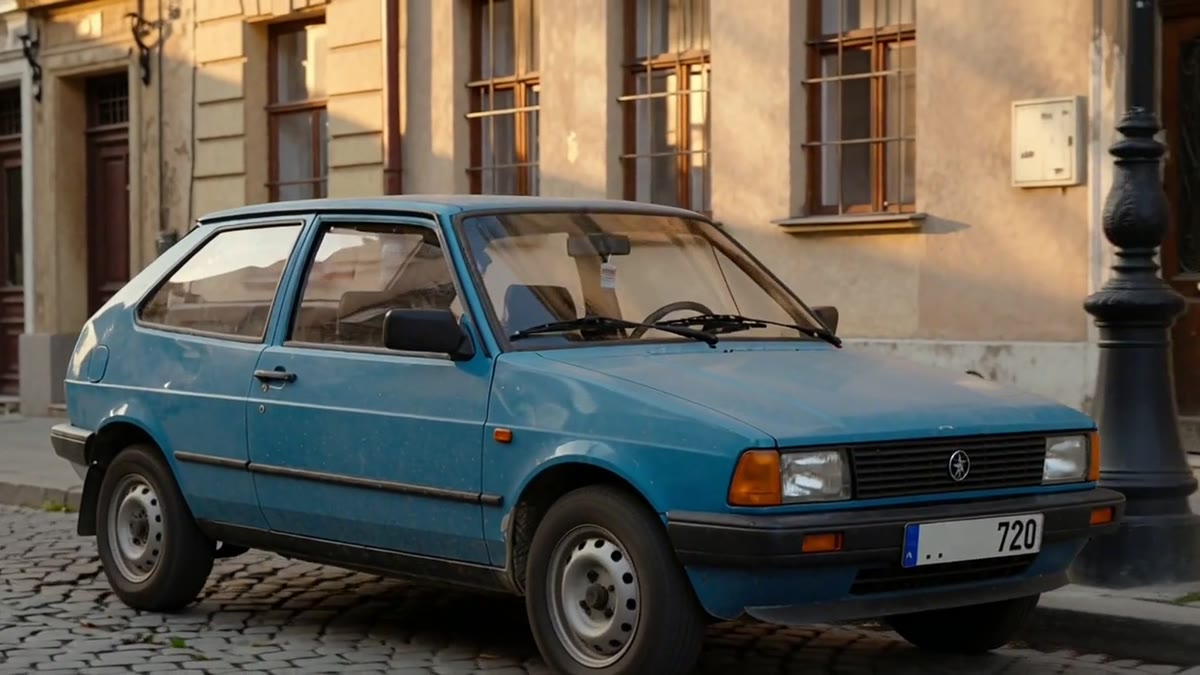
Where the Yugo came from
The Yugo was built in Kragujevac, in central Serbia, by a company called Zastava. The factory began in 1851 as a state military workshop that cast cannons. Cars came later. In 1954 Zastava signed a licensing deal with Fiat, and its first big hit, the Zastava 750, known as the Fića, was based on the Fiat 600. Around 923,000 were built over three decades. For many Yugoslav families it was the first car they ever owned.
The Yugo itself started production in November 1980, based on a shortened Fiat 128: a small front-wheel-drive hatchback. It was meant to be simple, cheap to repair, and something an ordinary family could actually own. It was also a symbol. Its engine reportedly came from Bosnia, electrical parts from Slovenia, interior parts from Croatia, with final assembly in Kragujevac. In a country whose slogan was "brotherhood and unity," the car was supposed to prove the point.
The American gamble
In 1984 an American importer named Malcolm Bricklin decided to bring the car across the Atlantic. America had a hole at the very bottom of the market: nobody sold a brand-new car for almost nothing. The Yugo launched at $3,990. A Toyota Tercel cost $5,798, a Honda Civic $5,479, a Chevrolet Chevette $5,959, a Ford Escort $6,052. That is roughly two thousand dollars of difference, which is a huge gap when a first car often means years of debt.
It also helped that this was the Cold War. Yugoslavia was communist, but it had broken with Stalin in 1948 and stayed outside the Soviet bloc, and, as historian Jason Vuic has described it, American policy was effectively to keep Tito's country standing. A Soviet Lada would not have been welcome in Reagan's America. A car from Yugoslavia could be.
Reality at the factory was less smooth. According to reporting by NPR and Old Cars Weekly, American engineers who visited in the mid-1980s came back with a list of more than four hundred changes needed to make the car legal and acceptable in the United States. A separate assembly line with handpicked workers was set up for the export cars.
The boom, and then the reputation
It worked, at first. Americans bought just under 4,000 in the partial first year, almost 36,000 in 1986, and 48,812 in 1987, the best year the Yugo ever had. For students, young couples and families who had never been able to afford a showroom car, it was a first. Popular Science tested it in 1987 and described its braking and handling as respectable for the price.
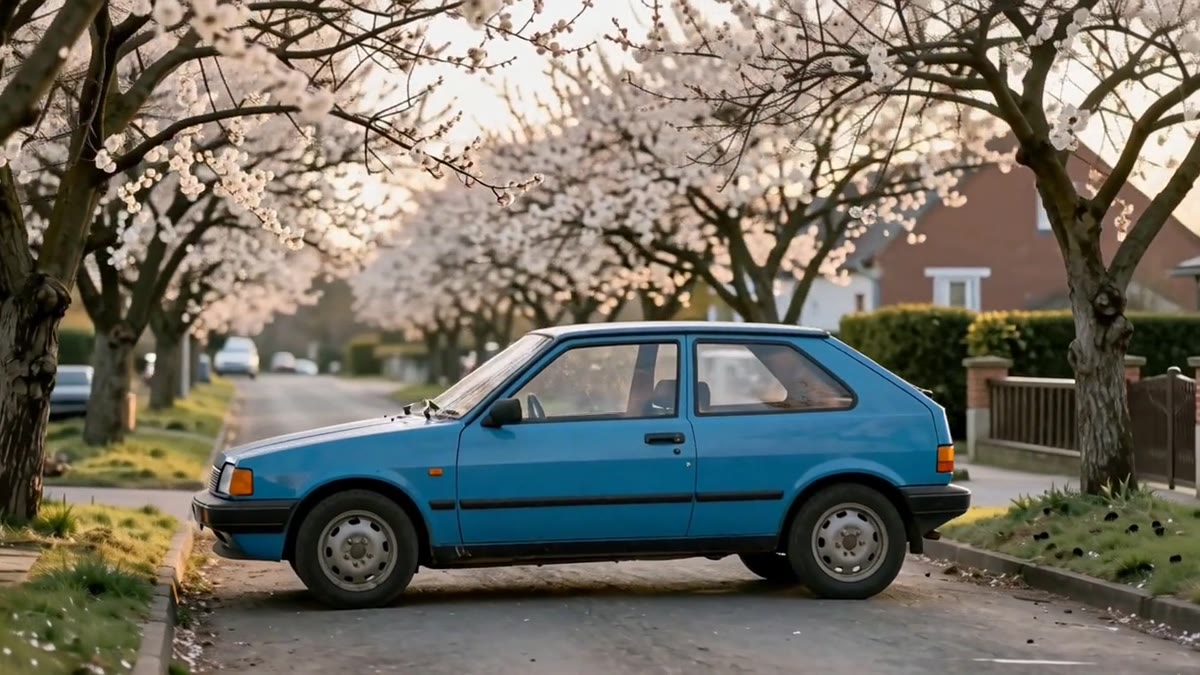
Then the verdicts started to land. Consumer Reports, in 1986, was harsh, and later described it as one of the worst cars its writers had tested. In 1987, Massachusetts published a "lemon index" ranking models by how often they failed owners, and the Yugo came first, which is the wrong place to be. In crash tests by the Insurance Institute for Highway Safety, it finished second to last out of thirty-one small cars.
A cheap car can survive being cheap. It has a harder time surviving being unreliable. Once the jokes started, they did not stop: the standard one was that you could double the value of a Yugo by filling the tank. Movies joined in, and in 1996 the British presenter Jeremy Clarkson destroyed one with a tank on television. In 1990 the EPA ordered a recall of about 126,000 Yugos over emissions. Sales dropped from about 10,500 in 1989 to roughly 6,000 in 1990 and about 1,400 in 1992. Yugo America closed in April 1992. In total, 141,651 Yugos had been sold in the United States.
Vuic's blunt explanation is that the company was overextended and undercapitalized from day one. It could not adapt quickly to new competitors like the Hyundai Excel, and back in Serbia the factory was slow to fix quality problems, with little real domestic competition pushing it to move faster. Some accounts say quality actually improved between 1988 and 1991. By then, the reputation was already set.
Meanwhile, at home
The American story is only half of it. In 1991 Yugoslavia began to break apart, and the car's multi-republic supply chain broke with it. In 1992 the United Nations imposed sanctions on Serbia and Montenegro, which stayed in place until 1996. Zastava, which had built roughly 200,000 cars a year in 1989, was down to about 14,000 by 1998.
In April 1999, NATO bombed the Zastava plant in Kragujevac. NATO said its campaign was meant to stop violence in Kosovo; many Serbs saw it as an attack on ordinary livelihoods. Kosovo's status is still contested, so I will stay with what can be documented. According to reporting by the Institute for War and Peace Reporting, the factory was left in ruins. Zastava employed about 36,000 people, with roughly 64,000 relatives depending on those wages. The factory restarted in 2000 but never recovered its old scale. Fiat took a 67 percent stake in 2008, and the last car with the Zastava name rolled off the line that November. Across its life, 794,428 Yugos were made, about 250,000 of them exported.
The second life
The car still refused to disappear. In 2019, a project called Yugoverse began offering tours of Belgrade in restored Yugos. Serbs even have a word for the mood around it: Yugonostalgia, a longing for a country that no longer exists and the ordinary things that belonged to it. British magazine Car once bought a 1984 Yugo in Munich for 2,000 euros and drove it back to Kragujevac, and the writers said it got more thumbs-up than a McLaren P1. A Serbian mechanic told them a big repair cost less than a hundred euros.
There is also a documentary, Yugo Goes to America, directed by Filip Grujić and Aleksa Borković, which follows three young Serbs driving a Yugo from New York to Los Angeles. It premiered at CPH:DOX in March 2026 and won the audience award at BELDOCS. I could not find a streaming release yet, so I am only describing it.
What the story is really about
To America, the Yugo became a cautionary tale about a bargain being worth exactly what you paid. To Serbia, it was family: a car repaired by somebody's cousin, parked outside a wedding, driven to the village for the weekend. The factory that built it was bombed and the country that created it disappeared, and the little car kept going. The full version, with the timeline and the people involved, is in the video.
Watch it on Icarus Paradox →If you like forgotten cars and corporate collapses
FAQ
Why did the Yugo fail in the United States?
Several things piled up. Reliability complaints and harsh reviews gave the car a bad reputation fast, cheap-car problems were never fixed quickly enough, better small cars such as the Hyundai Excel arrived at similar prices, and the importer, Yugo America, was described by historian Jason Vuic as overextended and undercapitalized from the start. Yugo America closed in April 1992.
How many Yugos were sold in the United States?
About 141,651 in total. Sales peaked at 48,812 in 1987 and fell to roughly 6,000 in 1990 and about 1,400 in 1992.
How much did a new Yugo cost in America?
The launch price in 1985 was $3,990, about two thousand dollars less than most rival small cars such as the Toyota Tercel, Honda Civic, Chevrolet Chevette and Ford Escort.
Was the Yugo really the worst car ever made?
Not according to Jason Vuic, who spent years researching it. He argues it was a cheap car with cheap-car problems, sold to people who could not afford anything else. Its reputation was shaped by reviews, jokes and a few bad years of quality.
Are Yugos still on the road today?
Yes. Around sixty thousand are reportedly still registered in Serbia, and more than thirty-four thousand in Slovenia. A project called Yugoverse runs tours of Belgrade in restored Yugos, and in 2025 a businessman bought the rights to the brand with plans for a retro-inspired model.
Sources used: Jason Vuic, The Yugo: The Rise and Fall of the Worst Car in History; NPR; Old Cars Weekly; Curbside Classic; Popular Science (1987); Consumer Reports (1986, paraphrased); Insurance Institute for Highway Safety; Institute for War and Peace Reporting; Radio Free Europe; Car magazine; UNESCO; CPH:DOX and BELDOCS. Some figures vary slightly between sources; where an account comes from a single source, the text says so.
New rise and fall stories drop regularly on the channel. If you like this kind of history, subscribe so you do not miss the next one.
Subscribe to Icarus Paradox →Want the full checklist behind this story?
"What the Giants Got Wrong" is an $8 PDF with eight real business failures (Blockbuster, Kodak, Toys R Us, Borders, Nokia, BlackBerry, Gurgel and Yugo), the warning signs, and what to do in your own business. Educational, with no promise of results.
Get the guide ($8, PDF) →Not ready to buy? Download the free 14-warning-signs checklist (PDF).
Keep reading
More from our channels
Jairo Oliva Jofer
Digital nomad. Brazilian living in Serbia. Jairo writes honest, no-fluff guides on earning real income online with AI, and tells rise and fall stories of companies and technologies on the Icarus Paradox channel. See all guides →