Gurgel: Brazil's Forgotten Electric Car From 1974 (It Wasn't Tesla)
Short answer: Gurgel was a Brazilian carmaker that built an electric city car, the Itaipu, in 1974, long before electric cars were fashionable. It also built the first fully Brazilian-designed car, the BR-800, and then disappeared. Here is the story in brief.
Ask most people outside Brazil who built an early electric car and the answers are Tesla, Nissan, maybe a General Motors project. Few would say Brazil. Yet in 1974 a Brazilian company launched a small electric car for city use, and the man behind it was already an unusual figure in the industry.
The engineer who left Ford
João Augusto Conrado do Amaral Gurgel (1926 to 2004) left Ford do Brasil in 1958 and started building his own vehicles. He is reported to have been told, as a student, that in Brazil you do not make a car, you buy one. He spent the next three decades proving otherwise. In 1969 he founded Gurgel, first producing fiberglass buggies on Volkswagen Beetle chassis.
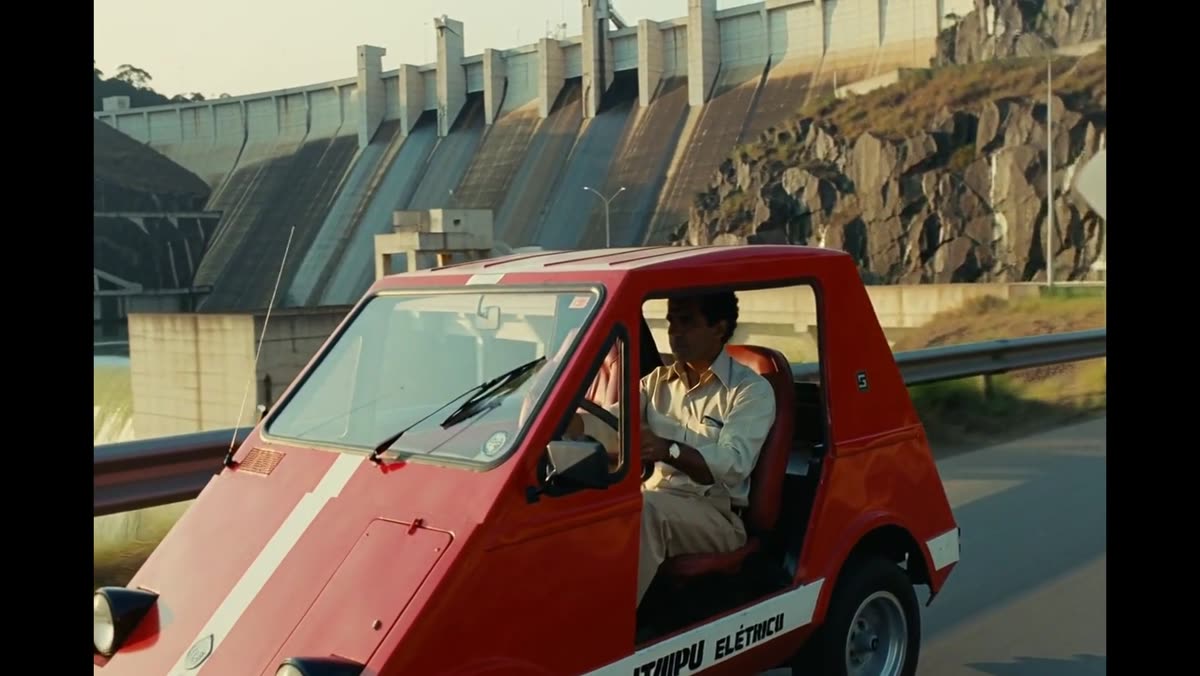
The Itaipu, 1974
The Itaipu was a small two-seat electric car with rechargeable batteries, designed for short urban trips. Battery technology at the time was the limit: range and charging could not support a mass-market car, and development stalled. Gurgel later built electric delivery vans, the Itaipu E400 and E500, with better range.
Off-roaders, an engine, and a national car
The company's biggest commercial success was the Xavante X-12, a rugged off-road vehicle. Gurgel also developed its own two-cylinder engine, the Enertron, with electronic ignition, and the BR-800, launched in 1987 and often described as the first fully Brazilian-designed and built car. It weighed about 650 kilograms and measured 3.19 meters, the smallest car ever produced in Brazil. The thousandth BR-800 was delivered in 1989.

Why it ended
In 1990 Fiat launched the Uno Mille, and the small-car market shifted. Gurgel sought state funding to expand and did not get it. The company filed for preventive bankruptcy in 1993, stopped operating in 1994, and was formally closed in 1996, after producing more than 40,000 vehicles. Gurgel himself was later diagnosed with Alzheimer's.
There is more to the story, including what Brazil's car industry looked like at the time and why a homegrown carmaker was so unusual. We cover it in the video above, about 9 minutes.
Watch the full video on YouTube →FAQ
Did Brazil build an electric car in 1974?
Yes. The Gurgel Itaipu, launched in 1974, was a small two-seat electric car for urban use. Limited battery technology kept it from becoming a mass-market product.
Who was Gurgel?
João Augusto Conrado do Amaral Gurgel (1926 to 2004) was a Brazilian engineer and industrialist who left Ford do Brasil in 1958 and founded Gurgel in 1969.
What was the Gurgel BR-800?
A small car launched in 1987, widely described as the first fully Brazilian-designed car. It had an 800 cc engine, weighed about 650 kg and was 3.19 meters long.
What happened to Gurgel?
The company entered preventive bankruptcy in 1993, ceased operations around 1994 and was officially closed in 1996.
New rise and fall stories drop regularly on the channel. If you like this kind of history, subscribe so you do not miss the next one.
Subscribe to Icarus Paradox →Want the full checklist behind this story?
"What the Giants Got Wrong" is an $8 PDF with eight real business failures (Blockbuster, Kodak, Toys R Us, Borders, Nokia, BlackBerry, Gurgel and Yugo), the warning signs, and what to do in your own business. Educational, with no promise of results.
Get the guide ($8, PDF) →Not ready to buy? Download the free 14-warning-signs checklist (PDF).
Keep reading


More from our channels
Jairo Oliva Jofer
Digital nomad. Brazilian living in Serbia. Jairo writes honest, no-fluff guides on earning real income online with AI, and tells rise and fall stories of companies and technologies on the Icarus Paradox channel. See all guides →