Free Vintage Synth Emulations: How the Virus TI and Microwave XT Came Back as Free VSTs
Short answer: a group of developers called The Usual Suspects found a way to bring back some of the most loved synths of the late 1990s and early 2000s, for free. Instead of imitating their sound, they emulate the chips inside each machine and run the original firmware on them. The result: the Access Virus TI, the Waldorf Microwave XT, the Nord Lead 2x and the Roland JP-8000 now run as plugins on an ordinary laptop.
For years, if you wanted the sound of a Virus or a Microwave, there was one way: hunt for a used one and pay what the seller asked. Software "inspired by" these synths existed, but it was never quite the same. What changed is a different idea of what emulation means.
Modeling vs. emulating the chips
Most synth plugins are models: a developer listens to the hardware, measures it, and writes new code that tries to behave the same way. It can sound great, but it is always a reconstruction.
Many virtual analog synths of the late 90s were already digital inside. Their sound came from Motorola DSP chips running code written by the manufacturer, the firmware. So The Usual Suspects took a different route: they rebuilt those chips in software, and then let the original firmware run on them, exactly as it did inside the hardware. The plugin is not a copy of the sound. It is the same program, running on a virtual version of the same chip.
That is also why the plugins are heavy on the CPU, and why you need the firmware file: the plugin is the "machine", the firmware is what makes it a Virus or a Microwave.
The free emulations available
| Plugin | Original synth | Notes |
|---|---|---|
| Osirus | Access Virus A, B and C | The first Virus generations |
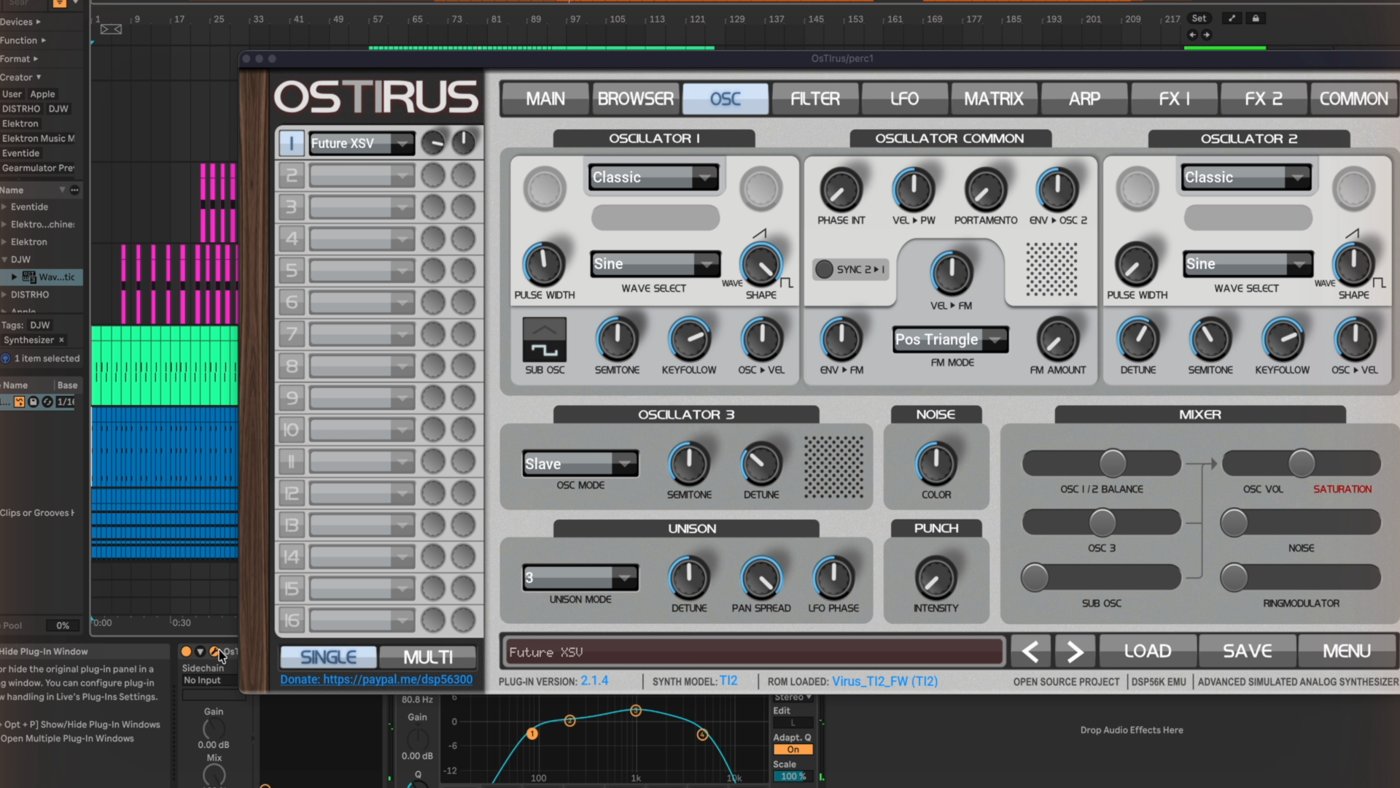
| OsTIrus | Access Virus TI, TI2 and Snow | Released 22 April 2024 |
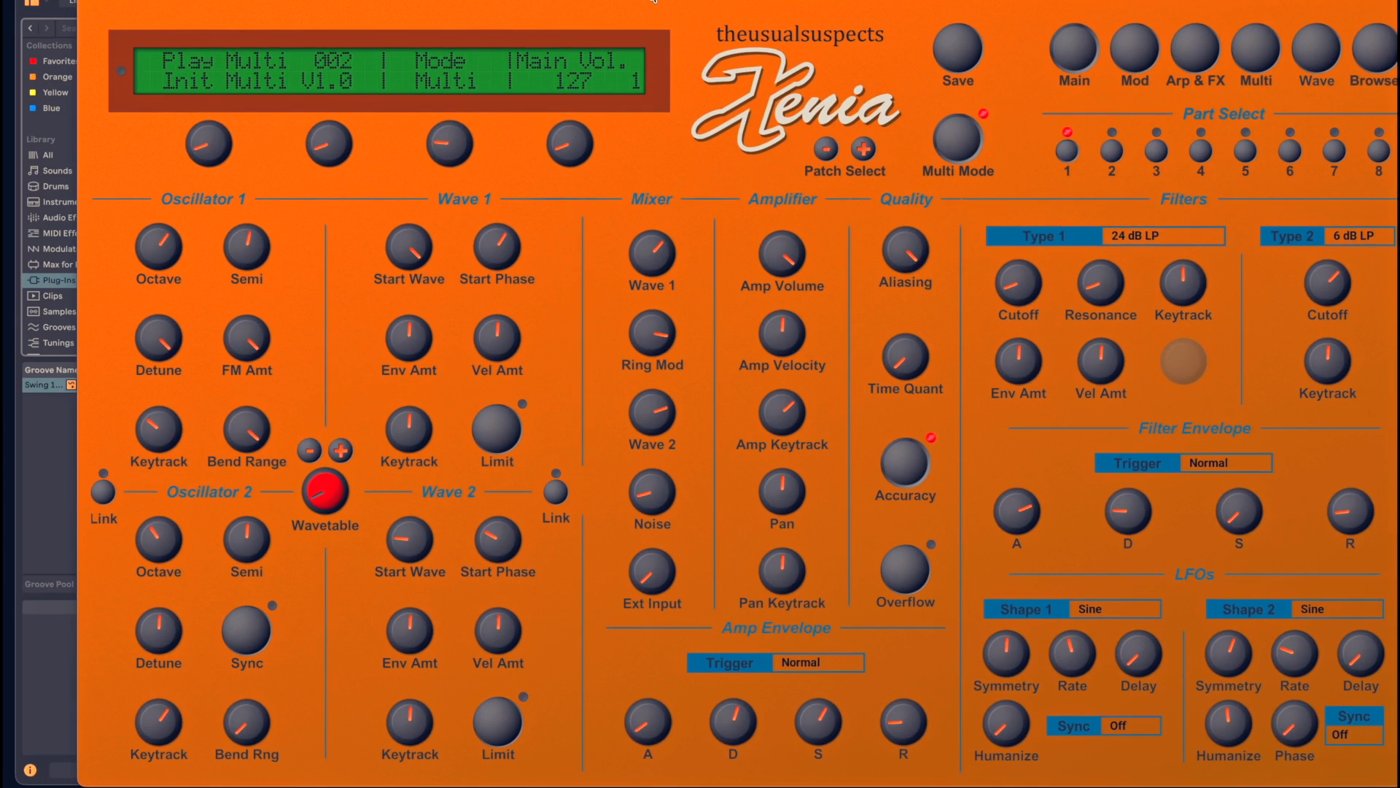
| Xenia | Waldorf Microwave II and XT | Wavetable synth, 2024 |
| Vavra | Waldorf microQ | Shown as alpha in 2023 |
| Nodal Red 2x | Clavia Nord Lead 2x / Rack 2x | The red virtual analog classic |
| JE-8086 | Roland JP-8000 and JP-8080 | Free for everyone since December 2025 |
Source: the gearmulator project page on GitHub, plus the release articles listed at the end. All plugins: GPL-3.0, Windows 7+, macOS 10.13+ and Linux, x64 and ARM (Apple Silicon, Raspberry Pi), in VST2, VST3, AU, CLAP and LV2.
The Virus: from 300 units to a free plugin
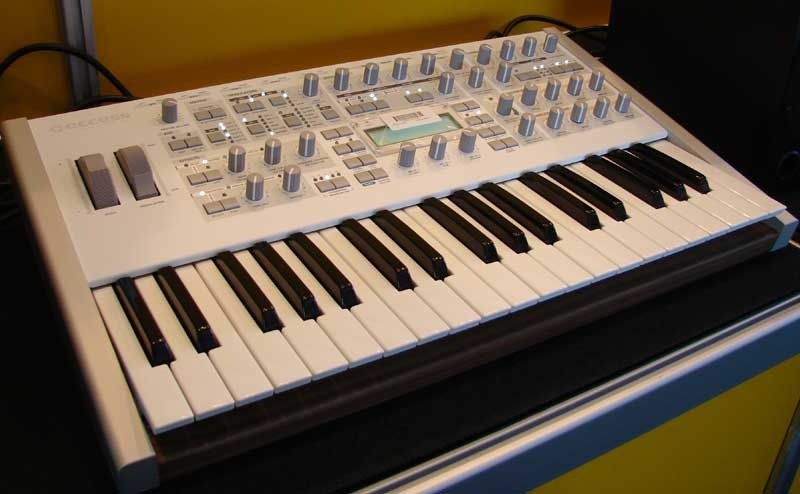
Access showed the first Virus at the Musikmesse in Frankfurt in 1997. Inside there was no analog circuit, just a Motorola DSP doing the math of an analog synth in real time. In its first year it sold about 300 units. Then came the B, the C, the Indigo, and slowly the Virus took over trance and dance studios.
In 2005 the Virus TI arrived ("Total Integration"): connected by USB, it appeared inside your music software as a plugin, while the hardware made the sound. In Germany the desktop cost around €1,800 and the keyboard versions around €2,350. In February 2024 it was confirmed that production of the TI2 had ended. Two months later, OsTIrus was released.
The Microwave: the PPG sound that refused to die
The Microwave story starts with Wolfgang Palm in Germany. In the late 1970s he had the idea of storing a whole table of waveforms in memory and letting the sound move through them: wavetable synthesis. His company, PPG, put it into the PPG Wave from 1981, a synth that cost between $7,000 and $10,000 and ended up on records by Depeche Mode, Tears for Fears and a-ha.
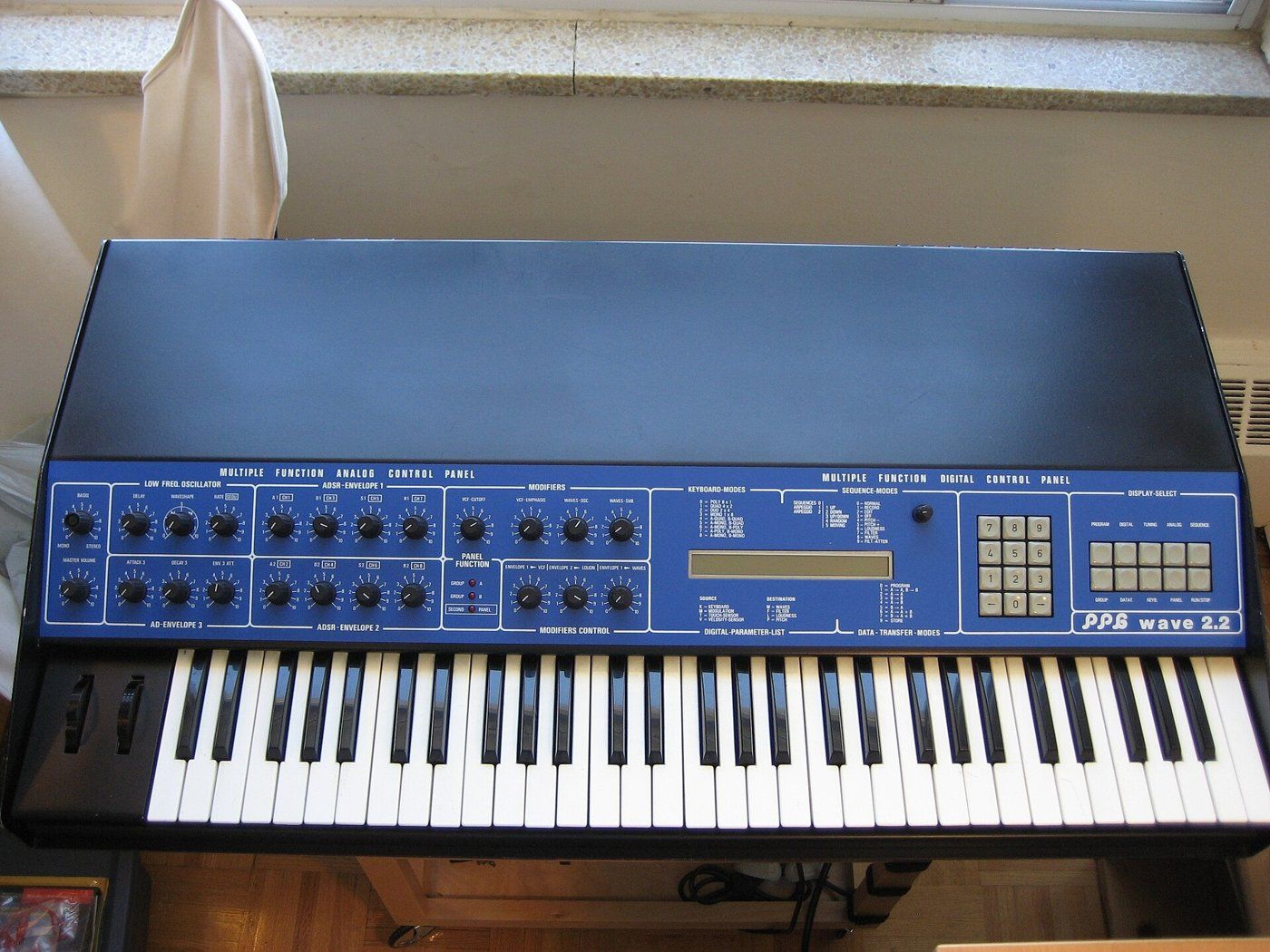
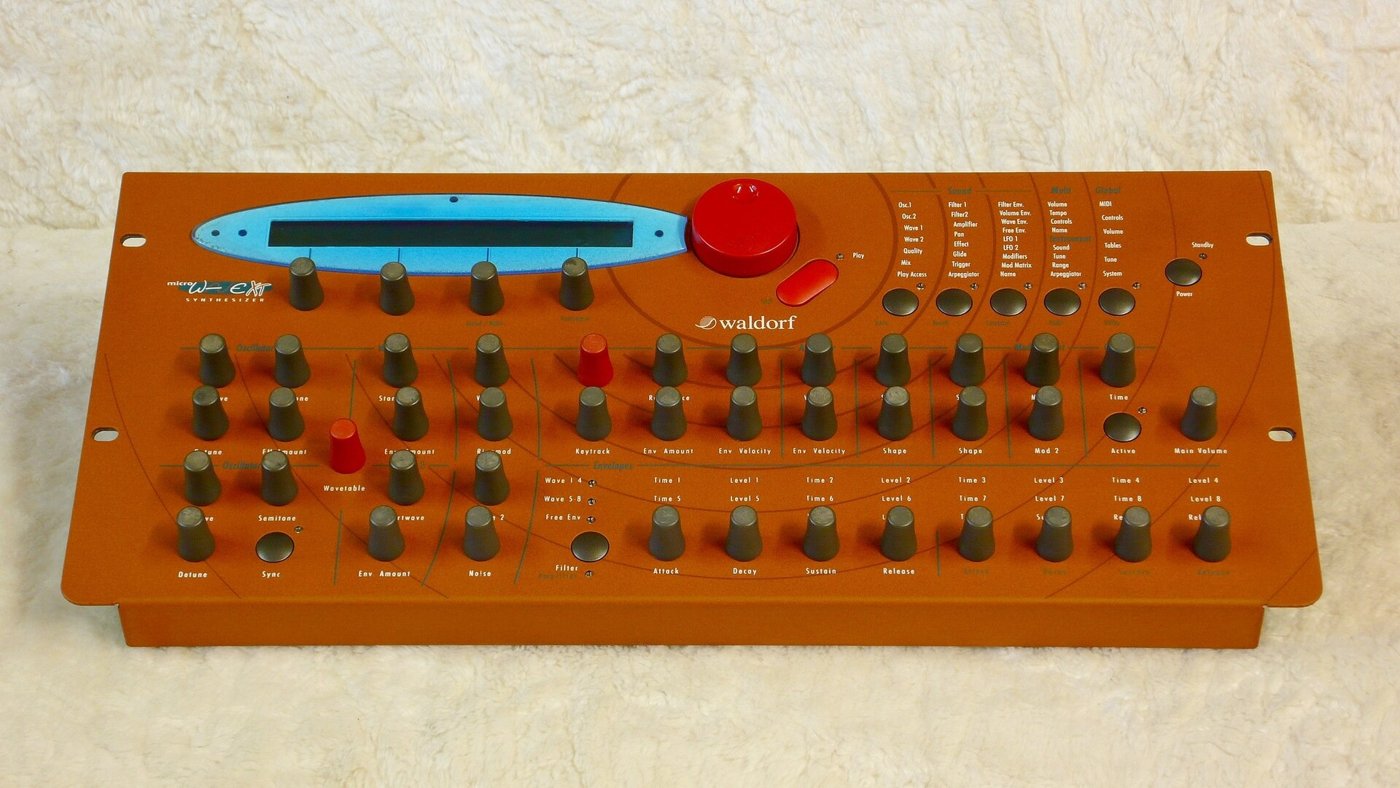
PPG closed in 1987. Its German distributor, Wolfgang Düren, founded Waldorf in 1988, and in 1989 Waldorf released the first Microwave: the same wavetables, through a real analog filter, for a fraction of the price. In 1998 came the bright orange Microwave XT, with 10 voices and 8 parts. Waldorf went insolvent in 2004 and came back as Waldorf Music, but the XT was gone. Used ones still sell for well over €1,000. Xenia brings it back for free.
One honest detail: the firmware
The plugins are free, but the firmware of each synth is not included. You have to supply it yourself, and the developers explain how in their installation guide. Read it before you install, and only use firmware you are allowed to use. (For the microQ, the developers said an OS update file from Waldorf's own website is enough.)
Practical tips
- Use one instance, not sixteen. The Virus TI is multitimbral: one OsTIrus can play up to 16 parts. On the Radio In Altum channel, the first episode used 16 separate instances before a viewer pointed this out. One instance saves a lot of CPU.
- Freeze or bounce tracks once a part is finished.
- Start from the factory presets. They show what each synth is good at (there are no-talking preset videos for both below).
Watch them in action: every video from the channel
The Radio In Altum channel runs a series called 1 Track 1 Synth: one full track, made with one single synth, start to finish. Here is everything so far:
- The Legendary Virus TI Is Now a FREE VST (OsTIrus): the story of the Virus, from 300 units to a free plugin
- 1 Track 1 Synth #1: Full Minimal House Track Made ONLY With OsTIrus: a whole track built with one synth, step by step
- Access Virus TI Sounds, No Talking: 75 OsTIrus Presets: just the sounds
- 1 Track 1 Synth #2: Minimal House With Xenia (Step by Step): Microwave XT emulation, part 1
- 1 Track 1 Synth #2: Minimal House With Xenia (Part 2): a hard day in the studio, mistakes included
- Microwave XT Sounds, No Talking: 69 Xenia Presets: just the sounds
Support 1 Track 1 Synth
The series is free on YouTube. If it helped you, you can support it with any amount you want. The goal: a Vermona drumDING for the studio, and more episodes with real hardware.
Support the series (pay what you want) →FAQ
Are these synth emulations really free?
Yes. The plugins from The Usual Suspects are free and open source under the GPL-3.0 license. What is not included is the original firmware (the ROM) of each synth, which you have to supply yourself, following the developers' instructions.
Do they sound exactly like the hardware?
They come very close by design, because they do not imitate the sound: they emulate the chips inside the synth and run the original firmware on them. The analog parts around the chips, like converters and output stages, are not part of the emulation.
Do they run on Apple Silicon Macs?
Yes. According to the project page, they run on Windows 7 or newer, macOS 10.13 or newer and Linux, on 64-bit x86 and ARM, including Apple Silicon and Raspberry Pi. Formats: VST2, VST3, AU, CLAP and LV2.
Why do they use so much CPU?
Emulating a DSP chip cycle by cycle is heavy work. A practical tip: the Virus TI is multitimbral, so one OsTIrus instance can play up to 16 parts. Using one instance instead of one per track saves a lot of CPU.
Which one should I try first?
If you like trance, hypersaws and big basses, start with OsTIrus (Virus TI). If you like glassy, evolving wavetable sounds, start with Xenia (Microwave XT).
Sources
- gearmulator on GitHub (The Usual Suspects): synth list, license, platforms, formats
- The Usual Suspects, OsTIrus release (22 April 2024)
- MATRIXSYNTH, Xenia emulates the Waldorf Microwave XT (May 2024)
- Gearnews, JE-8086 available to everyone (December 2025)
- Synth Anatomy, Vavra (Waldorf microQ) emulation (April 2023)
- Wikipedia, Access Virus
- Sound On Sound, Access Virus TI review (December 2005)
- Gearnews, end of Virus TI2 production (February 2024)
- Wikipedia, PPG Wave
- Wikipedia, Waldorf Music
Photos: Wikimedia Commons (licenses in each caption). Screenshots: Radio In Altum.
Which classic synth would you like to see emulated next? Tell us in the video comments.
Subscribe to Radio In Altum →Related: Roland JP-8000 and the free JE-8086 VST: history, 31 presets and a full track.